
Outdoor Furniture That Survives Indian Summers, Monsoons and Winters: The Complete Climate-Proof Buying Guide

Ask anyone who has bought outdoor furniture in India without researching it first and you will hear the same story. The cushions turned green with mould after the first monsoon. The metal frame rusted by February. The wicker started unravelling within a year. The wood cracked in the summer heat and swelled so badly the joints split.
India is one of the most demanding climates on the planet for outdoor furniture. You are not buying furniture for one season. You are buying it to survive 45-degree summer heat in May, relentless humidity and rainfall from June through September, dry cold in November and December, and coastal salt air if you live near the sea. Most outdoor furniture sold in India is not designed with all of this in mind.
This guide will change how you think about outdoor furniture shopping. We will cover every material option available in the Indian market, which ones survive which climates, how to set up a balcony, garden or terrace space correctly, and what ongoing care actually looks like so your furniture lasts five years or more instead of falling apart in two.
Section 1: Material Guide for Outdoor Furniture in India
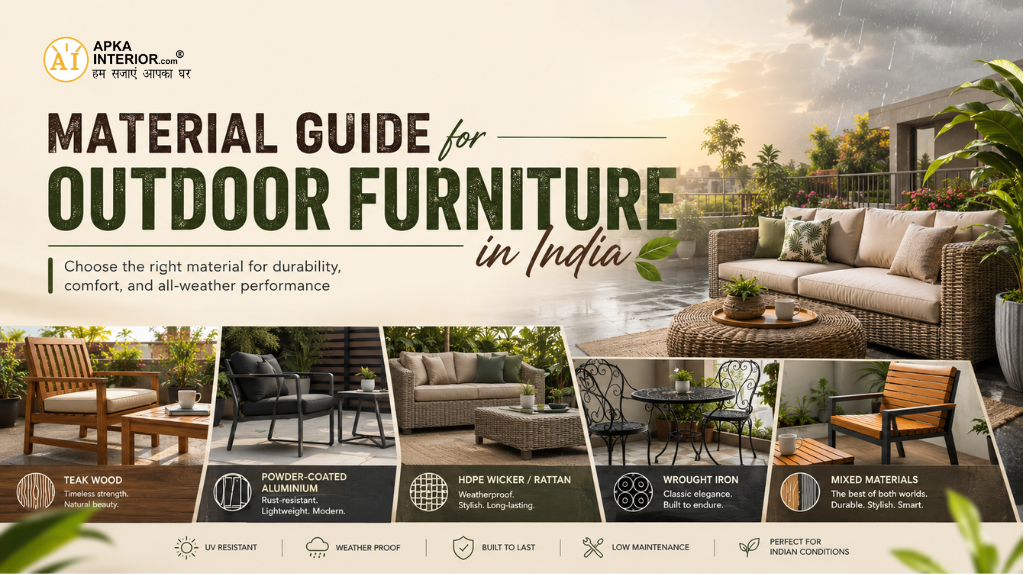
The material your outdoor furniture is made from determines everything: durability, maintenance effort, comfort level and how it ages in Indian conditions. Here is an honest breakdown of every major material available.
Teak Wood
Teak is the gold standard for outdoor furniture in India and has been for centuries. It produces its own natural oil that repels water, resists termites and prevents the wood from cracking or warping even through repeated wet and dry cycles. Teak furniture left outdoors through an Indian monsoon and then through peak summer will develop a silver-grey patina over time, which many people find attractive, but the structural integrity remains completely sound.
The downside is cost. Quality teak outdoor furniture carries a significant premium. It is also heavy, so rearranging a teak garden set is not something you do casually. For those who want genuine longevity and are buying for a garden, terrace or large balcony where permanence is fine, teak is the best long-term investment.
Powder-Coated Aluminium
Aluminium outdoor furniture has become increasingly popular in Indian cities for very good reasons. It does not rust. At all. Unlike iron or steel, aluminium is naturally resistant to corrosion, and powder coating adds an additional layer of protection against scratches, UV fading and surface damage. It is also lightweight: an aluminium chair weighs roughly a third of an equivalent iron chair, which makes rearranging balcony furniture effortless.
Aluminium furniture handles Indian monsoons, coastal salt air and summer heat exceptionally well. The one consideration is that aluminium can feel warm to the touch when left in direct afternoon sun. Adding cushions addresses this and also increases comfort significantly. For Indian balconies and compact terraces, aluminium is the most practical all-weather material available at a mid-range price.
Cast Iron and Wrought Iron
Iron outdoor furniture has a classic, heavy aesthetic that many buyers find attractive. It is extremely sturdy and the weight means it will not blow over in strong winds or monsoon gusts. However, iron rusts. In India’s humid monsoon conditions, iron furniture without diligent annual maintenance will show rust within two seasons.
If you choose iron outdoor furniture, look for pieces with high-quality powder coating or a rust-resistant paint finish, and plan to re-coat or touch up the finish every year before the monsoon. Iron furniture works best in covered outdoor areas like verandahs, covered patios or porches where direct rain exposure is limited.
Synthetic Wicker or HDPE Rattan
Natural wicker and rattan are beautiful but they are genuinely not suited to Indian outdoor conditions. They absorb moisture, expand during monsoon, crack during summer dry heat and unravel at the weave points within a couple of seasons. If you love the wicker aesthetic, look specifically for HDPE (high-density polyethylene) synthetic wicker, which is woven around an aluminium frame.
HDPE wicker does not absorb water, does not crack in heat and does not unravel over time. It looks visually identical to natural rattan but performs entirely differently in outdoor Indian conditions. Most quality outdoor sofa sets and lounge chairs sold in India today use HDPE wicker on aluminium frames for this exact reason.
Teak and Aluminium Combination
Many of the best outdoor furniture pieces available in India today combine teak accents with aluminium frames. You get the warmth and natural beauty of wood for the visual parts of the furniture and the rust-free, lightweight durability of aluminium for the structural frame. This combination is particularly popular for outdoor dining sets and sun loungers where both aesthetics and structural durability matter.
Solid Acacia and Mango Wood
Acacia and mango wood are budget-friendlier alternatives to teak that still offer reasonable outdoor durability. They do not have teak’s natural oil content, so they require more regular sealing and maintenance. An annual application of teak oil or wood sealant before the monsoon is essential to prevent cracking and moisture absorption. Well-maintained acacia outdoor furniture can last four to six years in Indian conditions.
| Material | Rust Risk | Monsoon Resistance | Summer Heat | Maintenance | Price Range |
| Teak Wood | None | Excellent | Excellent | Low | Premium |
| Powder-coated Alum. | None | Excellent | Good | Very low | Mid |
| Cast / Wrought Iron | High | Moderate | Good | High | Mid |
| HDPE Synthetic Wicker | None | Excellent | Good | Low | Mid |
| Teak + Aluminium | None | Excellent | Excellent | Low | Mid-Premium |
| Acacia / Mango Wood | None | Moderate | Moderate | Medium | Budget-Mid |
Section 2: Balcony vs Garden vs Terrace vs Veranda: Different Spaces Need Different Furniture
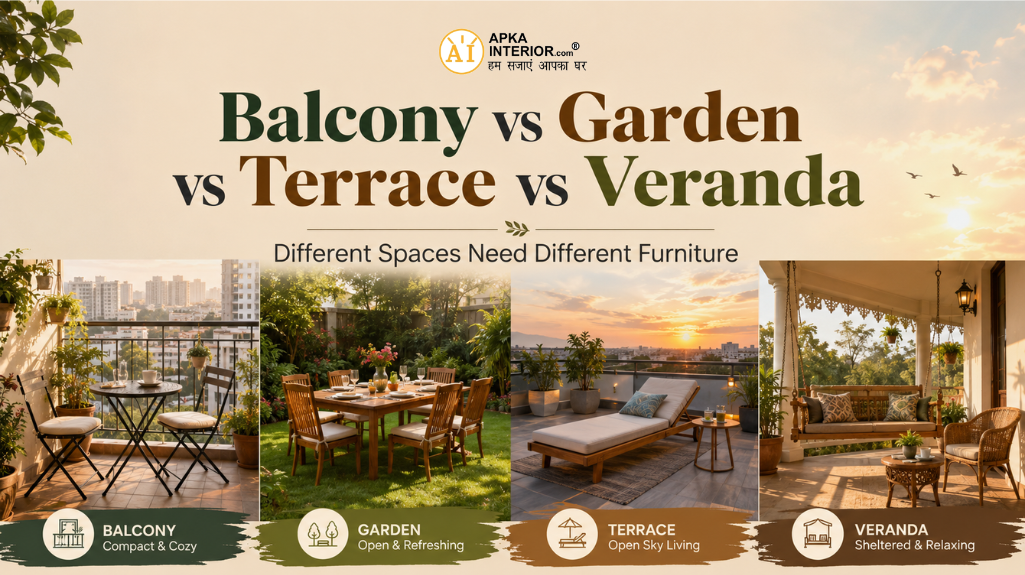
Not all outdoor spaces are the same and the furniture that works perfectly on a large garden terrace will look cramped and out of scale on a Mumbai apartment balcony. Here is how to think about furniture selection for each type of outdoor space.
Apartment Balcony
Most Indian apartment balconies range from 30 to 80 square feet. In a space this size, scale and proportion are everything. Large chunky outdoor sofas simply do not work here. The goal is to create a functional, comfortable corner with pieces that leave enough floor space to move around.
For a small balcony, two lightweight chairs with a small side table is the most practical configuration. Folding chairs or chairs with a slimmer silhouette are ideal because they can be moved inside when not in use or during heavy rain. A narrow bench along the railing wall or a two-seater bistro set gives you seating without overwhelming the space.
Vertical space is your friend on a balcony. A wall-mounted planter shelf, a hanging swing chair or a tall narrow planter alongside a single chair makes the space feel layered and designed without taking up more floor area.
| Balcony furniture tip For balconies under 60 square feet, choose furniture with legs rather than solid base pieces. Legs allow air to flow underneath which reduces the musty smell that develops in enclosed outdoor spaces during monsoon. They also make cleaning the floor much easier. |
Garden or Lawn
A garden or lawn gives you the most freedom. Here you can invest in a full outdoor dining set, a garden sofa with a coffee table, or a dedicated relaxation zone with sunbeds and a shade umbrella.
The priority in garden furniture is ground stability. Garden surfaces are uneven and furniture with flat wide feet or adjustable feet will stay level and stable. Teak and aluminium combination dining sets, freestanding swings with their own frame and multi-seater outdoor sofas with UV-resistant cushions are all strong choices for garden spaces.
Think in zones when setting up a garden: a dining zone, a lounging zone and if space allows, a shaded reading or swing zone. Each zone has its own furniture vocabulary and should be planned separately rather than buying random pieces and hoping they come together.
Terrace or Rooftop
Terraces and rooftops in India get the most direct sun exposure and the most direct rain. They are also often exposed to stronger winds than ground-level spaces. Furniture weight matters here: lighter aluminium pieces can blow over in strong monsoon winds. Either choose heavier pieces or use furniture anchors and weighted bases for lighter items.
UV resistance is the key specification for terrace furniture. Fabrics and finishes that look bright in the shop can fade within a single Indian summer if they are not UV-rated. Always check whether cushion fabric is described as UV-resistant or outdoor-rated before buying for a terrace. Sunbeds, loungers and outdoor daybeds are popular on large terraces because the elevation and open sky make relaxation particularly enjoyable.
Veranda or Covered Porch
A veranda or covered porch is the most protected outdoor space and allows a wider range of furniture materials because direct rain exposure is minimal. This is where natural wood without heavy weatherproofing, rattan-look pieces and upholstered swing benches work well. The cover protects from rain and reduces UV intensity, extending the life of more delicate materials significantly.
| Outdoor Space | Ideal Furniture Types | Key Consideration | Avoid |
| Apartment Balcony | Bistro set, 2 chairs with side table, bench swing | Scale, leg clearance | Large sofa sets, solid base pieces |
| Garden or Lawn | Full dining set, outdoor sofa, swing, sunbed | Ground stability | Very lightweight pieces without weight |
| Terrace or Rooftop | Loungers, sunbed, UV-rated sofa, daybed | UV resistance, weight | Non-UV-rated fabrics, very lightweight chairs |
| Veranda or Porch | Swing bench, rocking chair, rattan-look pieces | Aesthetics, comfort | Pieces needing heavy weatherproofing |
Section 3: Monsoon-Proofing Your Outdoor Furniture
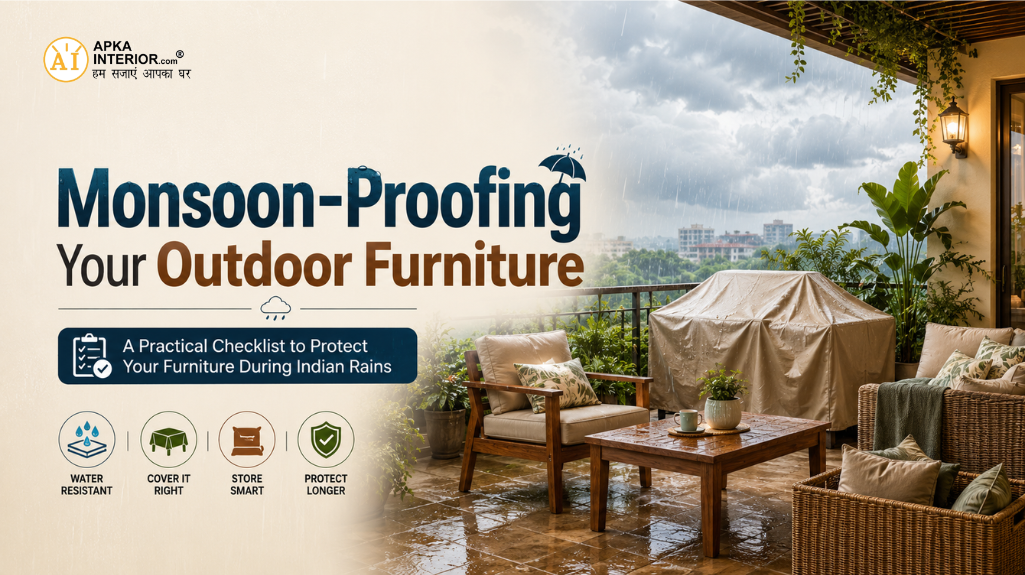
Monsoon is the single biggest threat to outdoor furniture in India. Even materials that handle rain well can be damaged by neglect during the four months of heavy rainfall. Here is a practical monsoon preparation checklist.
Before monsoon (May to early June)
- Clean all furniture surfaces thoroughly and let them dry completely in the sun before the rains begin. undefined
- Apply teak oil or wood sealant to any wood pieces, including teak, acacia or mango wood furniture. undefined
- Check all joints and tighten any screws or bolts that have loosened over the dry season. undefined
- Store cushions indoors or in a waterproof outdoor storage box. Most outdoor cushions are water-resistant, not waterproof, and prolonged monsoon exposure will damage even the best ones. undefined
- Apply a rust-prevention spray to any exposed metal joints or hardware, particularly on iron-framed pieces. undefined
During monsoon (June to September)
- Use furniture covers for pieces that will stay outdoors through heavy rain. Good quality waterproof covers protect the frame finish and prevent standing water from pooling on flat surfaces. undefined
- Elevate furniture slightly using rubber feet caps or anti-rust pads if your outdoor floor puddles during rain. Constant contact with standing water damages even rust-resistant materials over time. undefined
- Dry off furniture surfaces after heavy rain when possible. Leaving water to stand and evaporate naturally accelerates mineral deposit buildup, particularly in cities with hard water. undefined
- Move lighter pieces like bistro chairs and small tables to a sheltered spot during particularly strong monsoon storms. undefined
After monsoon (October to November)
- Do a full inspection of all outdoor furniture. Check for any rust spots, wood cracks, loose weave on rattan pieces or fading on cushion fabric. undefined
- Re-oil any wood pieces that look dry or have developed a grey surface. This restores the colour and re-seals the wood. undefined
- Clean cushion covers before storing or returning them to the furniture for the dry season. undefined
| The single most damaging thing you can do to outdoor furniture in India Leaving damp cushions on outdoor furniture through the monsoon. The moisture trapped between the cushion and the furniture surface creates a perfect environment for mould on fabric and accelerated rusting or rotting on the furniture surface underneath. Remove cushions before the monsoon or at minimum bring them in during heavy rain. |
Section 4: Furniture Recommendations for Specific Indian Climates
India is not one climate. What works for a home in Shimla is different from what works in Chennai, and both are different from what works in Jaipur. Here is a city-type breakdown for outdoor furniture material selection.
| Climate Type | Cities | Best Material | Avoid |
| Hot and dry | Delhi, Jaipur, Nagpur, Ahmedabad | Aluminium, teak, HDPE wicker | Rubber or cheap plastic pieces that crack in heat |
| Hot and humid coastal | Mumbai, Chennai, Kochi, Goa, Vizag | Powder-coated alum., teak | Iron, untreated natural wood, natural rattan |
| Moderate and hilly | Bengaluru, Pune, Hyderabad | Any good quality material | No major restrictions with basic care |
| Cold and dry | Shimla, Mussoorie, Ooty | Teak, iron with good coating | Aluminium in frost (can become brittle at very low temp) |
| High humidity inland | Kolkata, Bhopal, Lucknow | Aluminium, HDPE wicker, teak | Cheap MDF or particleboard any outdoor use |

Section 5: Monthly and Seasonal Care Calendar
Most outdoor furniture problems in India come from neglect, not from bad materials. A simple care routine that takes 30 minutes a season keeps outdoor furniture looking good for years.
Every month
- Wipe down surfaces with a damp cloth to remove dust, bird droppings and pollution deposits. undefined
- Check that furniture legs have not sunk into soil or that rubber feet have not compressed flat on hard surfaces. undefined
- Shake out and air cushion covers once a month to prevent moisture buildup inside. undefined
Pre-monsoon (May, one-time)
- Full clean, oil or seal application on wood, rust-prevention spray on metal hardware. undefined
- Store or waterproof cushions. undefined
- Tighten all joints and check structural integrity. undefined
Post-monsoon (October, one-time)
- Inspect for damage. Address rust, cracks or weave damage before they worsen through the dry season. undefined
- Re-oil wood pieces. undefined
- Clean and re-waterproof any furniture covers. undefined
Annually (before or after monsoon)
- Re-apply protective sealant or teak oil to all wood pieces. undefined
- Touch up powder-coated surfaces where chips or scratches have appeared. undefined
- Replace any cushion covers that have developed mould staining or significant fading. undefined

Frequently Asked Questions About Outdoor Furniture in India
Which outdoor furniture material is best for Indian weather?
For most Indian conditions, powder-coated aluminium is the most practical all-round choice. It does not rust, handles both summer heat and monsoon rain without any special treatment, is lightweight and comes at a mid-range price. For buyers who want a premium, long-lasting option and have a garden or large terrace, teak wood is the gold standard. HDPE synthetic wicker on an aluminium frame is the best choice for buyers who want the rattan aesthetic without the maintenance problems.
Does wicker outdoor furniture survive Indian monsoons?
Natural wicker and natural rattan do not survive Indian monsoons well. They absorb moisture during rain, expand and contract with humidity changes and weaken at the weave points over repeated wet and dry cycles. If you want wicker-style outdoor furniture, specifically look for HDPE or synthetic rattan woven on an aluminium frame. These look identical to natural wicker but are completely weather resistant and handle Indian monsoons without any degradation.
How do I protect outdoor furniture during monsoon season in India?
The most important steps before monsoon are: apply oil or sealant to any wood pieces, remove cushions indoors or to a waterproof storage area, check and tighten all joints, and use quality furniture covers for pieces that will stay outside. During the monsoon, keep cushions out of direct rain, wipe down surfaces after heavy rainfall to prevent mineral deposits, and inspect iron or steel hardware periodically for early rust spots. Catching a rust spot early and treating it with a rust converter is much easier than dealing with advanced corrosion.
What size outdoor furniture should I buy for an Indian balcony?
For a standard Indian apartment balcony between 30 and 80 square feet, a two-seater bistro set or two chairs with a small side table is the most functional choice. The furniture footprint should cover no more than 40 to 50 percent of the total balcony floor area to leave comfortable walking and movement space. For balconies above 80 square feet, a three-seater bench sofa with a coffee table or a small outdoor dining set with four chairs becomes viable.
Is teak outdoor furniture worth the price in India?
Yes, if you are thinking about long-term value. Teak outdoor furniture in India typically lasts 15 to 25 years with minimal maintenance. When you compare that lifespan to cheaper alternatives that need replacement every two to four years, teak often costs less per year of use over time. It also develops a beautiful silver-grey patina with age that many buyers find attractive. If initial cost is the constraint, acacia wood with regular oiling is the next closest option at a significantly lower price point.
Which outdoor furniture is best for a rooftop terrace in India?
For rooftops and terraces, the two key specifications are UV resistance and appropriate weight. Choose furniture with UV-rated fabric for cushions and sun-resistant finishes on the frame. Aluminium frames are the most practical for terraces because they are light enough to move but heavy enough to stay stable in moderate wind. Sunbeds and loungers are very popular on Indian terraces because the open sky and elevation make outdoor relaxation particularly enjoyable. Avoid very lightweight plastic pieces, which can be displaced in monsoon winds.
Explore Outdoor Furniture Built for Indian Conditions at Apka Interior
Whether you have a compact apartment balcony, a sprawling garden or a terrace with a city view, Apka Interior has outdoor furniture built to handle every Indian season without losing its look or its structure.
Browse our Outdoor Chair collection for space-efficient balcony seating. Explore our Outdoor Sofa range for garden and terrace lounge setups. Find our Outdoor Swings, Sunbeds and Loungers for a complete relaxation corner. And complete your outdoor space with planters from our Planter and Plants collection to bring greenery and life to your balcony or garden.