
Bathroom Upgrade Guide for Indian Homes: Washbasins, Faucets, Accessories and Everything That Actually Makes a Difference
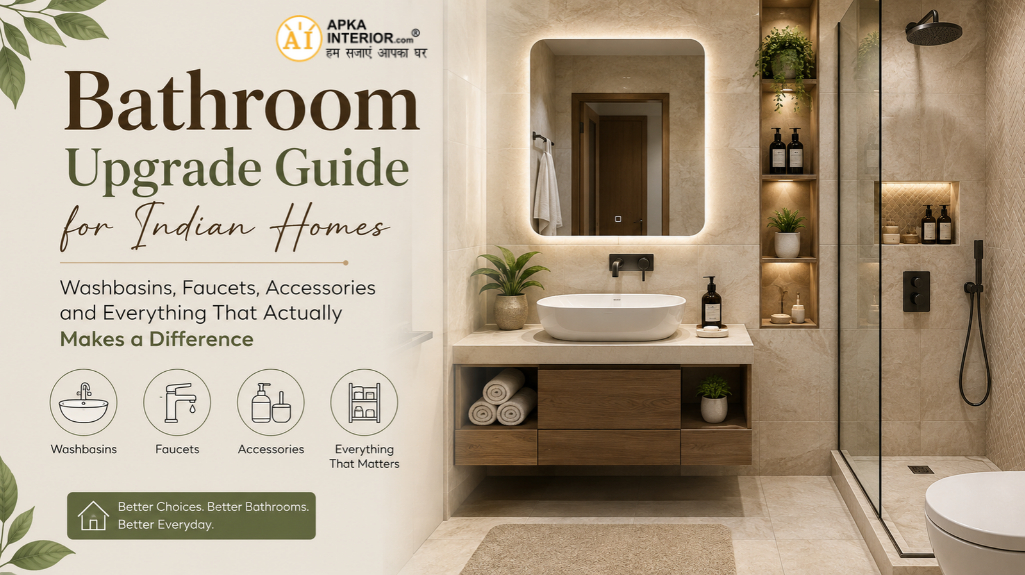
The Indian bathroom has undergone a quiet revolution over the last decade. What was once purely functional, a space designed for efficiency rather than experience, has become one of the most invested-in rooms in the Indian home. Bathroom renovation searches in India have grown consistently year after year. Hotel-style rain showers, vessel washbasins, sensor faucets and coordinated accessory sets are no longer aspirational. They are available, affordable and being installed in apartments across every major Indian city.
But bathroom upgrades in India also carry specific challenges that most buying guides written for Western markets completely ignore. Indian water pressure varies wildly between floors in an apartment building and between cities. Hard water, which is the norm across most of India, destroys chrome finishes and clogs faucet cartridges within a year or two if the wrong product is chosen. Small Indian bathrooms require different washbasin proportions than the spacious European bathrooms that inspire most design content online.
This guide is written specifically for Indian bathrooms. We cover washbasin types for every Indian bathroom size, faucet selection for Indian water pressure and water quality, the accessories that make the biggest visual and functional difference, finish durability in Indian hard water conditions and a realistic budget breakdown for three levels of bathroom transformation.
Section 1: Washbasin Types for Indian Bathrooms
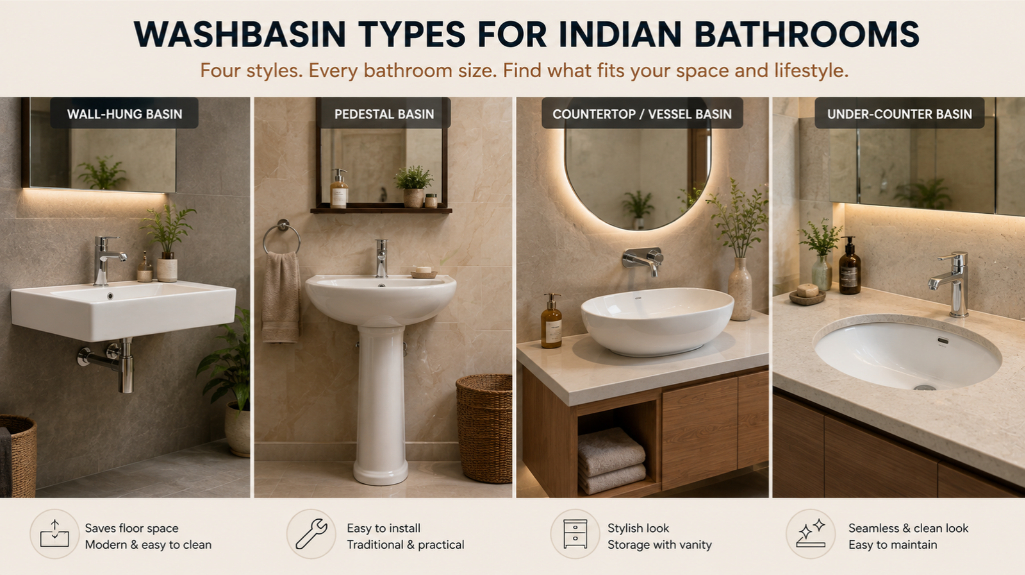
The washbasin is the anchor piece of any bathroom. It sets the visual character of the space, determines the amount of counter space available and affects how the bathroom functions on a daily basis. There are four main washbasin types in the Indian market and each suits different bathroom sizes, layouts and budgets.
Wall-hung or wall-mounted washbasin
A wall-hung washbasin mounts directly onto the bathroom wall with no pedestal or vanity cabinet underneath. The plumbing is concealed inside the wall, leaving clean open floor space below the basin. This open floor space is the biggest visual advantage of wall-hung basins: it makes any bathroom feel larger and easier to clean because there is nothing at floor level to mop around.
Wall-hung basins are the best choice for small to medium Indian bathrooms precisely because of this space-opening effect. They are available in compact sizes starting from 40 centimetres wide, which suits even the smallest Indian apartment bathrooms. The limitation is installation: wall-hung basins require a solid wall capable of bearing the mounting load, and the plumbing needs to be concealed during renovation. This makes them less practical for retrofitting in an existing bathroom where walls are already tiled and plumbing is exposed.
| Best for: Small and medium Indian bathrooms where floor space is at a premium. New renovations where wall plumbing can be planned during the work. Buyers who want a modern, hotel-style bathroom aesthetic. Bathrooms with at least 90 to 100 centimetres of width available for the basin and working space beside it. |
Pedestal washbasin
A pedestal washbasin sits on a column pedestal that conceals the plumbing pipe running from the basin to the floor drain. This is the most traditional washbasin format in Indian homes and remains very widely used because it is easy to install in an existing bathroom without major wall work.
Pedestal basins are available in a wide range of sizes and shapes, from classic oval forms to more contemporary rectangular profiles. The pedestal conceals the plumbing neatly but takes up floor space from the column base to the wall, making floor cleaning slightly more involved than a wall-hung basin. For bathrooms where wall modification is not possible or budget does not allow concealed plumbing, a pedestal basin is the most practical and cost-effective upgrade.
Countertop or vessel washbasin
A countertop basin sits on top of a vanity cabinet or counter shelf. Vessel basins, which are round or rectangular bowls sitting completely above the counter surface, have become very popular in premium Indian bathrooms because of the distinctive sculptural look they create.
Countertop basins work particularly well paired with a vanity cabinet that provides storage underneath, solving two problems at once. The counter height should be planned carefully: the basin bowl adds height above the counter, so a lower counter of 75 to 80 centimetres combined with a basin of 15 to 20 centimetres depth brings the working height to 90 to 95 centimetres, which is comfortable for most Indian adults.
Under-counter or under-mount washbasin
An under-counter basin mounts from below a solid counter, with the basin rim flush with or slightly below the counter surface. This creates a completely clean counter line with no visible basin rim break. It is the most seamless-looking installation of all basin types and makes counter cleaning very easy because there is no rim for water and soap to accumulate against.
Under-counter basins require a solid stone, quartz or engineered stone counter for proper mounting. A wooden or MDF counter will not support the under-mount load reliably over time. This makes them slightly more expensive to specify but the result is one of the most refined bathroom aesthetics available at the mid to premium segment.
| Basin Type | Bathroom Size | Installation | Storage | Visual Impact | Price Range |
| Wall-hung | Small to medium | Complex | None below | Very high | Mid to premium |
| Pedestal | Any size | Simple | None | Classic | Budget to mid |
| Countertop / vessel | Medium to large | Moderate | Cabinet below | Very high | Mid to premium |
| Under-counter | Medium to large | Complex | Cabinet below | Premium | Mid to premium |
Section 2: Faucet Guide for Indian Water Conditions
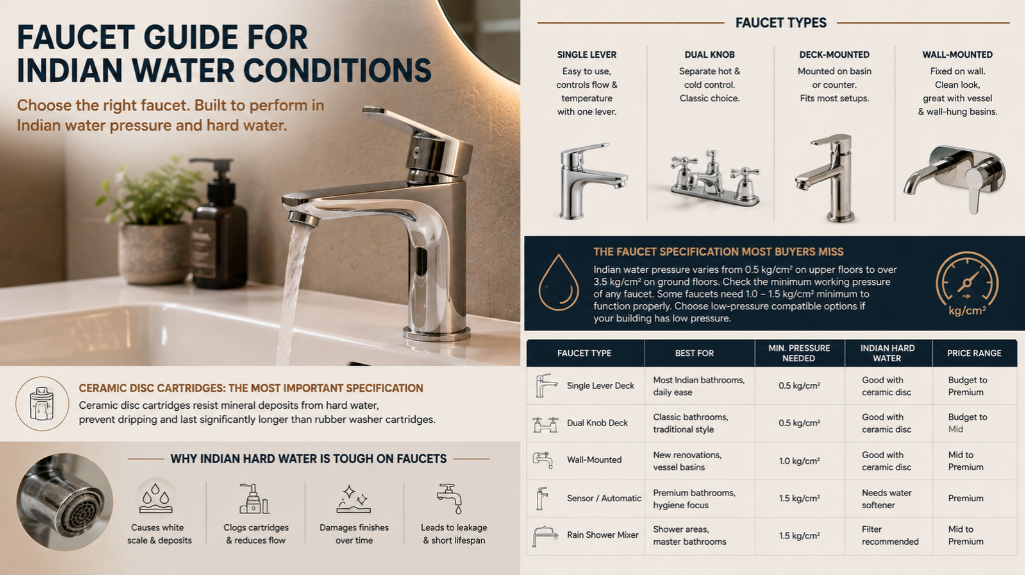
Choosing the wrong faucet for Indian water conditions is one of the most expensive bathroom mistakes a homeowner can make. Indian municipal water in most cities is hard water, containing high levels of dissolved minerals, primarily calcium and magnesium. Hard water attacks chrome finishes, builds up as white scale inside faucet cartridges and shortens faucet lifespan significantly compared to performance specifications tested in soft-water laboratory conditions.
Single lever vs dual knob faucets
A single lever faucet controls both water flow and temperature with one lever. You push it up to increase flow and move it left or right to adjust temperature. Single lever faucets are the most widely sold in India today because they are convenient and intuitive. For families with elderly members or young children, the one-handed operation is also a practical safety benefit.
A dual knob faucet has two separate controls for hot and cold water. The flow and temperature are adjusted by turning each knob independently. Dual knob faucets have a more traditional aesthetic and are popular for heritage-style bathrooms. The operational difference is mainly one of preference and aesthetic rather than functional superiority of either type.
Deck-mounted vs wall-mounted faucets
A deck-mounted faucet is installed on the basin itself through pre-drilled holes in the basin rim or through the counter surface. This is the most common faucet installation type in Indian bathrooms because it works with almost every basin type and does not require special wall preparation.
A wall-mounted faucet is fixed to the wall above the basin with the spout extending outward over the basin. This type requires plumbing supply concealed inside the wall, making it a renovation-phase decision rather than a retrofit. The visual impact is very high and it creates a floating, clean look that works particularly well with wall-hung and vessel basins. If you are planning a full bathroom renovation and wall plumbing can be specified during the work, wall-mounted faucets are one of the best investments for the visual outcome.
Ceramic disc cartridges: the specification that matters most
The cartridge inside the faucet is the component most affected by Indian hard water. Ceramic disc cartridges are the standard in modern single lever faucets. They use two ceramic discs that rotate against each other to control flow. Ceramic is hard and resistant to the mineral deposits that hard water leaves behind, making ceramic disc cartridges significantly more durable in Indian conditions than rubber washer cartridges.
Rubber washer cartridges are found in older or very cheap faucets. The rubber deteriorates faster in hard water and leads to dripping, which is the most common faucet problem in Indian homes. When buying any faucet, confirm that it uses ceramic disc technology. This should be stated explicitly in the product specifications.
| The faucet specification most buyers miss Indian municipal water pressure varies from as low as 0.5 kg per cm2 on upper floors in older buildings to over 3.5 kg per cm2 in ground floor units with good supply. Check the minimum working pressure specification of any faucet you are considering. Some sensor faucets and mixer faucets require a minimum pressure of 1.0 to 1.5 kg per cm2 to function correctly. If your building has low water pressure, these faucets will not work properly regardless of the quality of the product. Gravity-fed or low-pressure compatible faucets are the right choice for upper floors in most Indian cities. |
| Faucet Type | Best For | Min. Pressure Needed | Indian Hard Water | Price Range |
| Single lever deck | Most Indian bathrooms, daily ease | 0.5 kg/cm2 | Good with ceramic disc | Budget to premium |
| Dual knob deck | Classic bathrooms, traditional style | 0.5 kg/cm2 | Good with ceramic disc | Budget to mid |
| Wall-mounted | New renovations, vessel basins | 1.0 kg/cm2 | Good with ceramic disc | Mid to premium |
| Sensor / automatic | Premium bathrooms, hygiene focus | 1.5 kg/cm2 | Needs water softener | Premium |
| Rain shower mixer | Shower areas, master bathrooms | 1.5 kg/cm2 | Filter recommended | Mid to premium |
Section 3: Bath Accessories That Transform a Bathroom
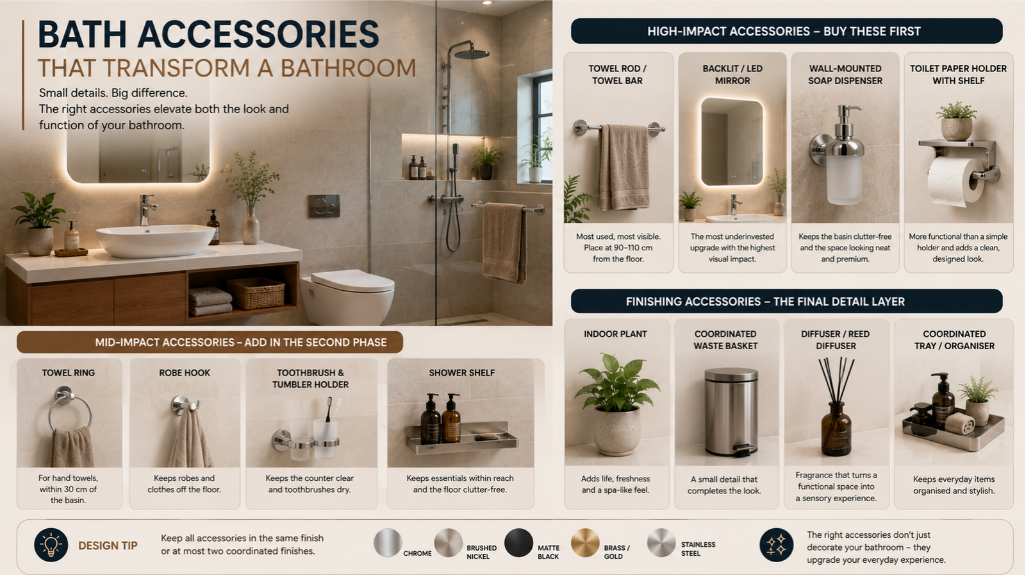
Bathroom accessories are the decor layer of any bathroom. The right accessories in a coordinated finish can make a builder-grade bathroom look significantly more premium without touching a single tile. The wrong accessories, mismatched finishes, cheap plastic pieces and overcrowded walls, are what make even a good bathroom look unfinished.
High-impact accessories: buy these first
- Towel rod or towel bar: A wall-mounted towel rod in a finish that matches your faucet and other hardware is the single highest-impact bathroom accessory per rupee. Place it at 90 to 110 centimetres from the floor, within easy reach of the shower or basin. A double towel rod saves wall space when two or more people share the bathroom.
- Backlit mirror or LED mirror: An appropriately sized mirror is essential in every bathroom and is often the most underinvested accessory in Indian homes. The mirror should be at least as wide as the washbasin and ideally wider. A backlit or LED-integrated mirror is one of the most transformative single upgrades in any Indian bathroom renovation, adding both practical illumination for grooming and a premium visual quality that changes the entire character of the space.
- Wall-mounted soap dispenser: Replaces the cluttered arrangement of bottles and bars that accumulates on basin rims in most Indian bathrooms. A dispenser in a finish coordinated with the faucet and towel rod creates a cohesive, designed appearance in the basin area.
- Toilet paper holder with shelf: A wall-mounted holder with a small shelf above it for a spare roll is significantly more functional than a simple ring holder and takes up no more wall space.
Mid-impact accessories: add in the second phase
- Towel ring: A towel ring beside the basin for a hand towel keeps the hand towel separate from the bath towel and accessible without reaching to the full towel rod. Place at 90 to 100 centimetres from the floor, within 30 centimetres of the basin.
- Robe hook: One or two robe hooks on the back of the bathroom door keep bathrobes and change-of-clothes off the floor. A hook at 160 to 170 centimetres from the floor works for most Indian adults.
- Toothbrush and tumbler holder: Wall-mounted, keeps the basin counter clear and keeps toothbrushes dry between uses. Available in two-slot and four-slot versions.
- Shower shelf: Mounted at chest height in the shower area for shampoo, soap and shower accessories. Prevents the floor-level bottle arrangement that is both cluttered and a slipping hazard.
Finishing accessories: the final detail layer
- Small indoor plant in a waterproof ceramic planter for a natural, spa-like quality to the space
- Coordinated waste basket in a finish that matches the accessory set
- Diffuser or reed diffuser for fragrance that turns a functional bathroom into a sensory space
Section 4: Finish Durability in Indian Hard Water Conditions
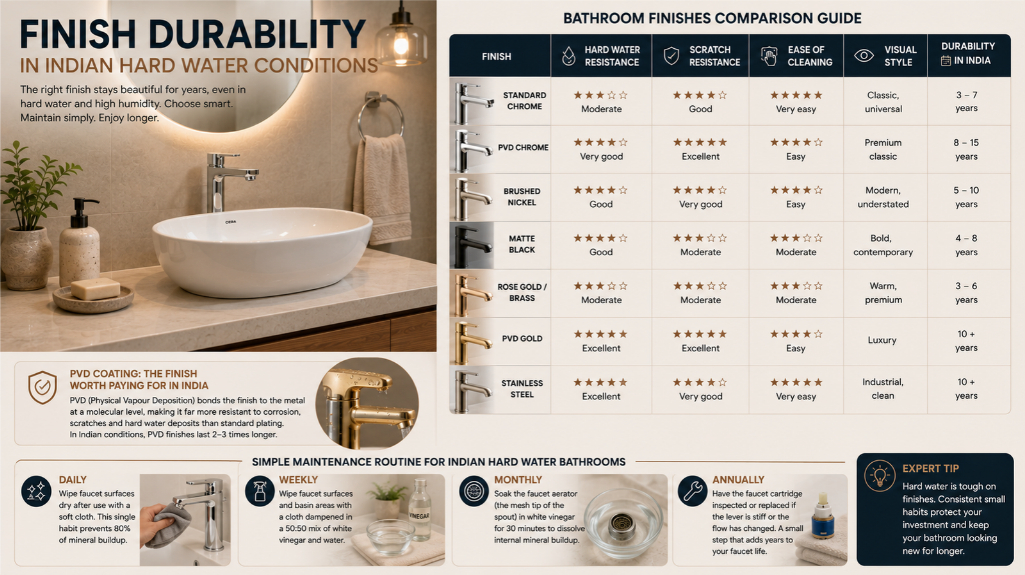
The finish on your faucets and bathroom accessories is the first thing to degrade in Indian hard water conditions. White mineral deposits build up on chrome surfaces, tarnish matte black finishes and make rose gold look patchy within months if the finish quality is poor. Understanding which finishes last in Indian conditions prevents expensive early replacement.
| Finish | Hard Water Resistance | Scratch Resistance | Ease of Cleaning | Visual Style | Durability in India |
| Standard chrome | Moderate | Good | Very easy | Classic, universal | 3 to 7 years |
| PVD chrome | Very good | Excellent | Easy | Premium classic | 8 to 15 years |
| Brushed nickel | Good | Very good | Easy | Modern, understated | 5 to 10 years |
| Matte black | Good | Moderate | Moderate | Bold, contemporary | 4 to 8 years |
| Rose gold / brass | Moderate | Moderate | Moderate | Warm, premium | 3 to 6 years |
| PVD gold | Excellent | Excellent | Easy | Luxury | 10 plus years |
| Stainless steel | Excellent | Very good | Very easy | Industrial, clean | 10 plus years |
| PVD coating: the finish specification worth paying for in India PVD stands for Physical Vapour Deposition. It is a coating process that bonds the finish to the metal at a molecular level rather than plating it on top. PVD-coated faucets and accessories resist hard water mineral deposits, household cleaners and daily contact significantly better than standard plated finishes. In Indian hard water conditions, a PVD chrome or PVD gold finish can last two to three times longer than a standard chrome-plated equivalent. Ask specifically whether any faucet or accessory has PVD coating before purchasing. |
Simple maintenance routine for Indian hard water bathrooms
- Daily: Wipe faucet surfaces dry after use with a soft cloth. This single habit prevents 80 percent of mineral deposit buildup. A damp surface left to air-dry in Indian hard water areas leaves mineral residue with every evaporation cycle.
- Weekly: Wipe faucet surfaces and basin areas with a cloth dampened in a 50:50 mix of white vinegar and water. The mild acid dissolves mineral deposits without damaging most finishes. Avoid vinegar on matte black and raw brass finishes.
- Monthly: Soak the faucet aerator, the mesh tip of the spout, in white vinegar for 30 minutes to dissolve internal mineral buildup that reduces water flow and changes the spray pattern.
- Annually: Have the faucet cartridge inspected or replaced if the lever is stiff or the flow has changed noticeably. A ceramic disc cartridge replacement costs Rs 200 to Rs 800 and extends faucet life by several more years.
Section 5: Bathroom Upgrade Budget Breakdown for Indian Homes
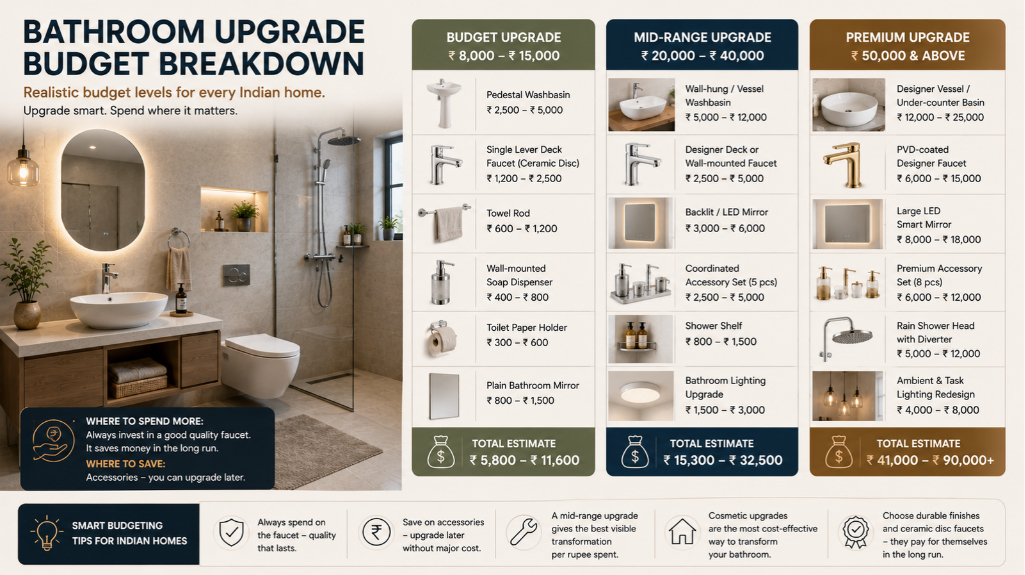
The cost of a bathroom upgrade in India spans a wide range depending on whether you are doing a full renovation or a cosmetic upgrade without touching tiles or plumbing. Here are three realistic budget levels for the cosmetic upgrade approach, which is what most buyers are planning.
Budget upgrade: Rs 8,000 to Rs 15,000
| Item | Estimated Cost |
| Pedestal washbasin | Rs 2,500 to Rs 5,000 |
| Single lever deck faucet with ceramic disc | Rs 1,200 to Rs 2,500 |
| Towel rod | Rs 600 to Rs 1,200 |
| Wall-mounted soap dispenser | Rs 400 to Rs 800 |
| Toilet paper holder | Rs 300 to Rs 600 |
| Plain bathroom mirror | Rs 800 to Rs 1,500 |
| Total estimate | Rs 5,800 to Rs 11,600 |
Mid-range upgrade: Rs 20,000 to Rs 40,000
| Item | Estimated Cost |
| Wall-hung or countertop vessel washbasin | Rs 5,000 to Rs 12,000 |
| Designer deck or wall-mounted faucet | Rs 2,500 to Rs 5,000 |
| Backlit or LED mirror | Rs 3,000 to Rs 6,000 |
| Coordinated accessory set (5 pieces) | Rs 2,500 to Rs 5,000 |
| Shower shelf | Rs 800 to Rs 1,500 |
| Bathroom lighting upgrade | Rs 1,500 to Rs 3,000 |
| Total estimate | Rs 15,300 to Rs 32,500 |
Premium upgrade: Rs 50,000 and above
| Item | Estimated Cost |
| Designer vessel or under-counter basin | Rs 12,000 to Rs 25,000 |
| PVD-coated designer faucet | Rs 6,000 to Rs 15,000 |
| Large LED smart mirror | Rs 8,000 to Rs 18,000 |
| Premium coordinated accessory set (8 pieces) | Rs 6,000 to Rs 12,000 |
| Rain shower head with diverter | Rs 5,000 to Rs 12,000 |
| Ambient and task lighting redesign | Rs 4,000 to Rs 8,000 |
| Total estimate | Rs 41,000 to Rs 90,000 |
| Where to spend more and where you can save Always spend on the faucet. A cheap faucet in Indian hard water conditions will drip, scale and need replacement within two to three years. A good quality ceramic disc faucet with PVD coating lasts a decade. Save on accessories if the budget is tight: a plain chrome towel rod does the same functional job as a designer brass one. The faucet is the piece that fails earliest and costs the most to replace including plumber charges, so it is the one place in a bathroom upgrade where spending Rs 1,000 to Rs 2,000 extra always makes sense. |
Frequently Asked Questions About Bathroom Upgrades in India
Which washbasin is best for a small Indian bathroom?
A wall-hung washbasin is the best choice for small Indian bathrooms because it creates open floor space below the basin, making the bathroom feel larger and easier to clean. Compact wall-hung basins are available from 40 centimetres wide, which suits even the smallest Indian apartment bathrooms. If wall modification is not possible, a compact pedestal basin in a round or oval shape is the most practical alternative. Avoid wide rectangular basins in small bathrooms as they visually dominate the space and leave insufficient working room on either side.
Which faucet is best for Indian hard water?
A single lever faucet with a ceramic disc cartridge and a PVD-coated or stainless steel finish is the best combination for Indian hard water conditions. The ceramic disc cartridge resists mineral deposits far better than rubber washer alternatives. PVD coating prevents the white calcification that ruins standard chrome plating on faucets within a few years in hard water areas. Brass-bodied faucets also resist the internal corrosion that hard water causes in zinc alloy bodies over time. Look for ISI-marked faucets which confirms they meet the Indian standard for water pressure, material and flow rate.
Is chrome or stainless steel better for Indian bathroom fittings?
Stainless steel has better long-term durability than standard chrome in Indian hard water and high-humidity conditions. Standard chrome plating can show pitting and tarnishing at weld points and surface scratches within a few years of exposure to hard water and cleaning products. PVD chrome is significantly better than standard chrome and approaches stainless steel durability. For faucets, a brass body with PVD chrome finish is a common and well-proven combination. For accessories like towel rods and soap holders, 304 grade stainless steel in a brushed or satin finish is the most durable and easiest-to-maintain option for Indian bathrooms.
How much does a bathroom renovation cost in India?
A cosmetic bathroom upgrade replacing only fittings and accessories without touching tiles or plumbing can be done for Rs 8,000 to Rs 40,000 depending on the quality level. A mid-range full renovation including new tiles, waterproofing, plumbing work and all fittings typically costs Rs 80,000 to Rs 2,00,000 for a standard Indian apartment bathroom of 30 to 50 square feet. A premium renovation with imported tiles, designer fittings and smart fixtures in a master bathroom can cost Rs 3,00,000 or more. The cosmetic upgrade approach gives the best visible transformation per rupee spent.
What bathroom accessories should I buy first?
Buy accessories in this order: mirror first because it is the highest-impact single piece in any bathroom, towel rod second because it is the most used daily accessory, soap dispenser third to clear the basin rim, toilet paper holder fourth and then remaining accessories in order of frequency of use. All accessories should be in the same finish or at most two coordinated finishes. Mixing chrome, matte black and brass in the same bathroom looks disconnected and unplanned, regardless of the individual quality of each piece.
Does water pressure affect which faucet I can buy for my Indian apartment?
Yes, significantly. Sensor faucets, thermostatic mixer showers and some designer wall-mounted faucets require a minimum working water pressure of 1.0 to 1.5 kg per cm2 to function correctly. In many Indian apartment buildings, upper floors above the fifth or sixth floor in buildings without booster pumps have water pressure that falls below this threshold during peak usage hours. Before buying any pressure-dependent faucet, check the building’s water pressure at the outlet nearest to the bathroom. If the pressure is consistently below 1.0 kg per cm2, choose a gravity-compatible or low-pressure faucet model.
Upgrade Your Bathroom at Apka Interior
Whether you are planning a complete bathroom transformation or simply replacing worn fittings with something better, Apka Interior has the full range to make it happen. From washbasins and faucets to coordinated accessory sets and bathroom lighting, everything is available online with delivery across India.
Browse our complete Washbasin collection across wall-hung, pedestal and countertop types in every size. Explore our Tap and Faucet range for ceramic disc and PVD-coated options suited to Indian water conditions. Find coordinated Bath Accessory sets in chrome, brushed nickel and stainless steel finishes. And complete your bathroom transformation with our Indoor Lighting collection including LED mirrors and backlit bathroom lighting options.