
Indoor Lighting Guide for Indian Homes: How to Light Every Room Like an Interior Designer
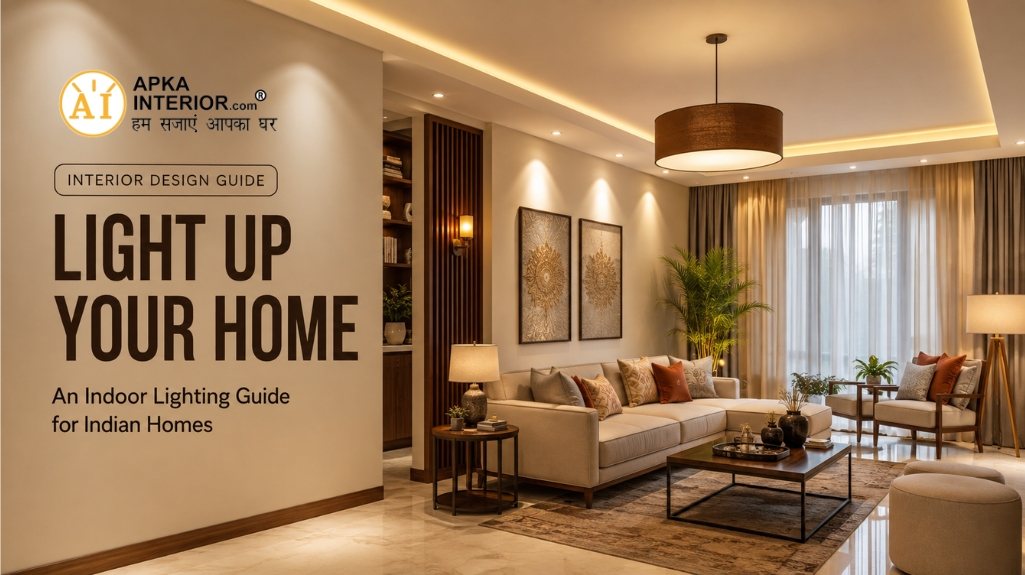
Spend two hours choosing a sofa. Spend three weeks comparing mattresses. Then walk into any lighting shop, feel overwhelmed, and buy the first ceiling panel that fits the hole in the ceiling. This is the lighting shopping experience for most Indian homeowners, and it is the single biggest reason why well-furnished Indian apartments still feel flat and unfinished.
Lighting is not a functional afterthought. It is the element that determines how every other decision in a room reads. The sofa you spent twenty thousand rupees choosing looks different at 3000K versus 6500K light. The wall colour your painter spent three days perfecting can look warm and inviting under the right light or grey and lifeless under the wrong one. The painting you bought for the dining wall is invisible if nothing is pointed at it.
Interior designers know this. That is why every professionally designed Indian home, from a Delhi farmhouse to a Bengaluru apartment, has a lighting plan that is thought through as carefully as the furniture layout. This guide gives you that framework in practical terms for Indian homes, Indian room sizes and the realities of Indian apartment construction. No jargon, no imported product recommendations, no suggestions that require a licensed electrician for every step.
Section 1: The Three Layers of Light Every Room Needs
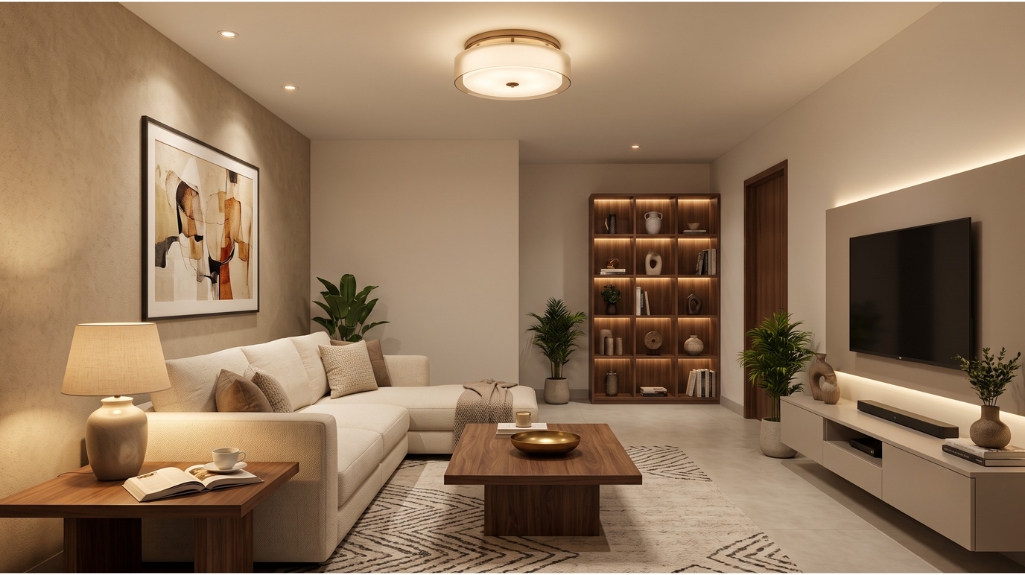
The core principle of good interior lighting is layering. A room lit only by a central ceiling light is like a room painted only in one flat colour. It covers the surface but creates no depth, no warmth and no visual interest. Layered lighting uses three types of light simultaneously, each doing a different job, to create a room that looks and feels complete.
Layer 1: Ambient light
Ambient light is the base layer. It is the general, overall illumination that allows you to see and move around the room safely. In Indian homes, ambient light is most often provided by a central ceiling fixture: a ceiling panel, a ceiling fan with a built-in light, a flush-mount light or a chandelier.
The job of ambient light is not to do everything. It is to provide a comfortable baseline of illumination across the room. The common mistake in Indian homes is over-relying on a single very bright ambient source, typically a high-wattage white ceiling panel, which flattens the room visually and eliminates any sense of warmth or atmosphere. Ambient light should be bright enough to function in but not so bright that it washes out the contribution of the other two layers.
Layer 2: Task light
Task light is focused, directed light for specific activities. Reading in bed needs task light from a bedside lamp. Cooking needs task light under the kitchen cabinets or above the prep counter. Working at a desk needs task light from a desk lamp. Applying makeup or grooming needs task light at the bathroom mirror.
Task light should be brighter and more directional than ambient light in its specific zone. The colour temperature of task light also matters: cooler, whiter light (4000K to 5000K) aids concentration and visibility for detail work, which is why it is appropriate for study lamps, kitchen under-cabinet lights and bathroom mirror lights. The same cool light in a living room sofa area would feel harsh and clinical.
Layer 3: Accent light
Accent light is decorative and directional. Its job is to highlight specific objects, surfaces or architectural features: a painting on the wall, a bookshelf, a sculpture on a console table, a textured feature wall. Accent light creates visual hierarchy in a room by drawing the eye to specific points and creating areas of brightness and shadow that give the room depth.
In Indian homes, accent light is the layer that is almost always missing and it is the one that makes the biggest difference to how premium a room looks. A simple LED picture light above a painting, a strip of LED tape behind a TV unit, a small spotlight angled at a wall sculpture or a table lamp casting light upward against a wall are all forms of accent light. None of them require complex installation and all of them transform a flat room into one with visual character.
| The layering rule of thumb Every room in your home should have at least two of the three layers and ideally all three. A room with only ambient light looks like an office. A room with ambient and accent light looks curated. A room with all three layers looks like it was designed. You do not need expensive fixtures to achieve this. Two affordable table lamps and one ceiling light already give you all three layers if positioned correctly. |
Section 2: Colour Temperature Guide for Indian Homes
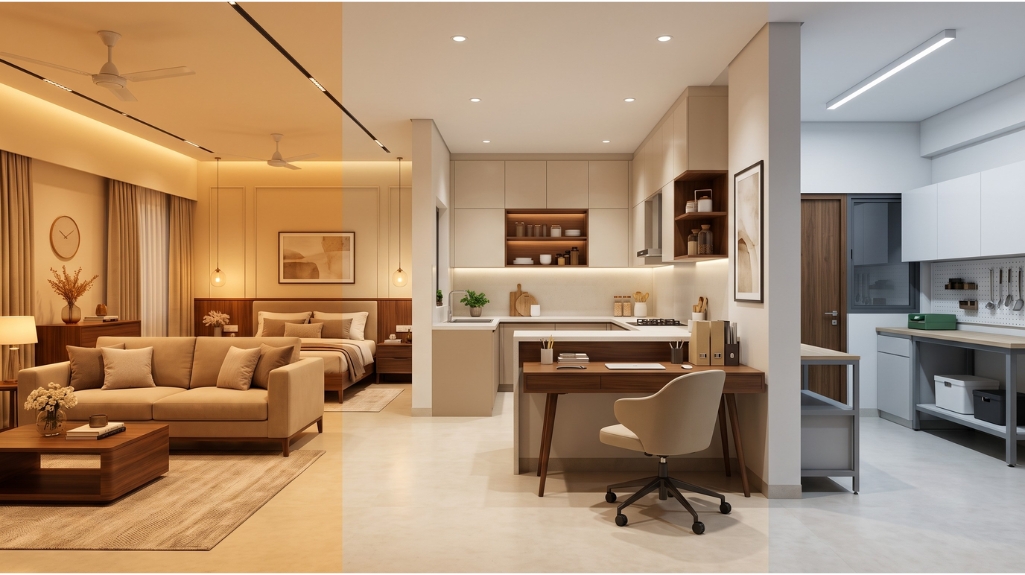
Colour temperature is measured in Kelvin (K). It describes whether a light source appears warm orange-yellow, neutral white or cool blue-white. It is the single specification that most affects how a room feels and it is the most commonly misunderstood when buying LED lights online.
| Colour Temperature | Appearance | Mood Created | Best Rooms in Indian Homes | Avoid In |
| 2700K | Very warm yellow-white | Intimate, relaxed, cosy | Bedroom, living room, dining room | Study, kitchen prep area |
| 3000K | Warm white | Welcoming, comfortable | Living room, dining room, hallway | Study desk, bathroom grooming area |
| 3500K | Neutral warm white | Balanced, versatile | Kitchen, bathroom, study | Bedroom (too clinical for sleep zones) |
| 4000K | Cool neutral white | Alert, focused, clean | Kitchen, home office, bathroom mirror | Bedroom, living room ceiling |
| 5000K to 6500K | Cool daylight white | Clinical, sharp | Garage, utility room, workshop | Any living or sleeping area |
| The most common Indian lighting mistake Buying 6500K cool white LED panels for every room in the house because the shop assistant said it is the brightest option. Brightness and colour temperature are two different specifications. A 6500K light is not brighter than a 3000K light of the same wattage. It simply looks harsher and colder. For living rooms and bedrooms in Indian homes, 2700K to 3000K warm white is the correct specification regardless of what the ceiling shop recommends. |
A practical way to remember the colour temperature guide: the warmer the colour temperature, the more the light resembles candlelight or a sunset. The cooler the colour temperature, the more it resembles the light in a hospital corridor. Indian homes need warmth in living and sleeping areas and functionality in working areas. Matching colour temperature to the activity in each room is the foundation of good lighting.
Section 3: Room-by-Room Lighting Blueprint for Indian Apartments
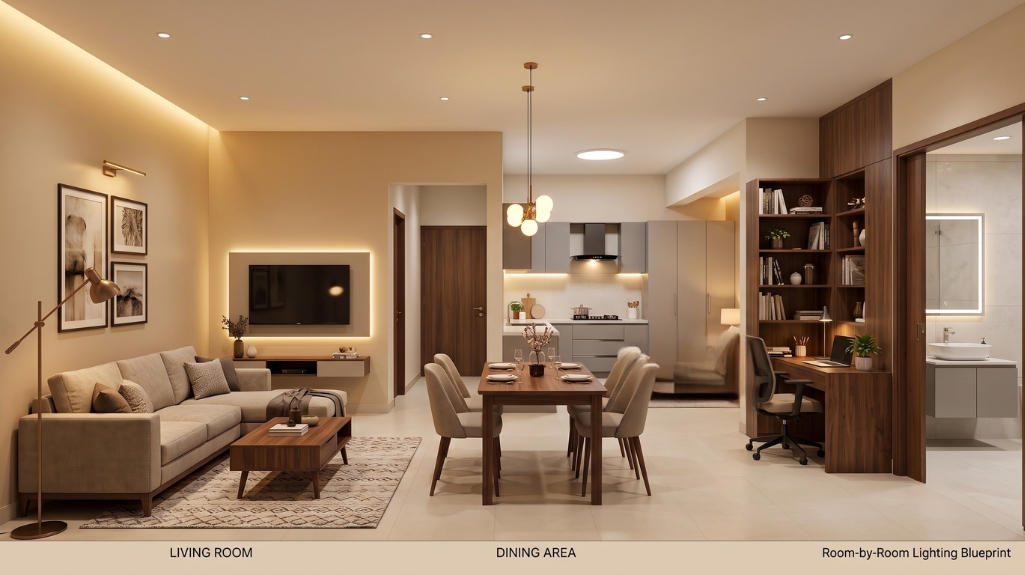
Here is a specific lighting plan for each room in a standard Indian 2BHK or 3BHK apartment. Each blueprint specifies the ambient, task and accent light sources appropriate for that room, the recommended colour temperature and practical fixture suggestions.
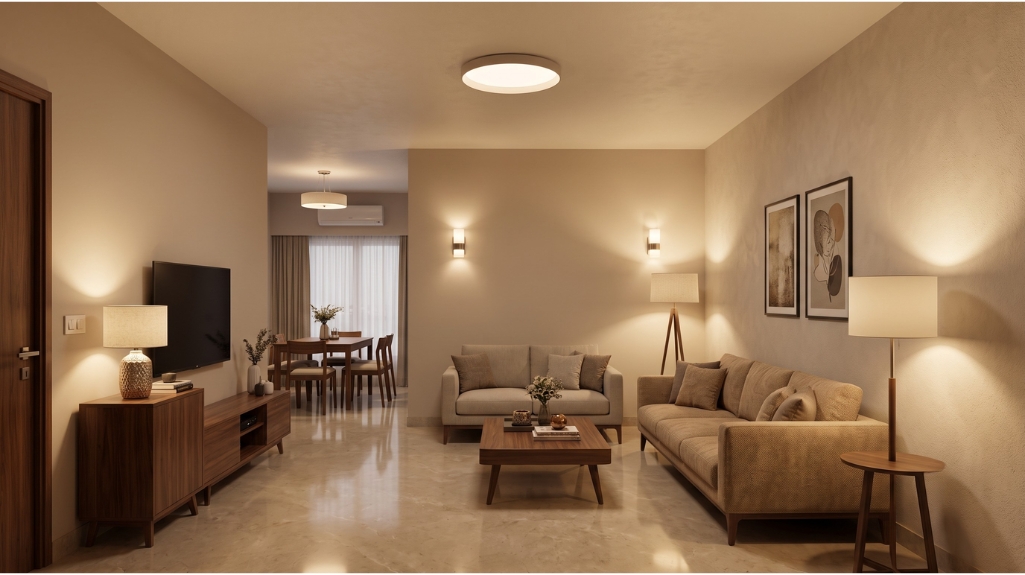
Living room
The living room is the most socially visible room in the home and the one that benefits most from proper layered lighting. It also needs to work for multiple activities: family time, entertaining guests, watching television and occasionally working from the sofa.
Ambient light: A central ceiling fixture at 3000K provides the base illumination. Avoid very bright flush-mount panels directly above the seating area as they cast unflattering downward shadows on faces. A chandelier or a ceiling fan with a decorative light ring at a moderate brightness is a better ambient choice for living rooms.
Task light: A floor lamp beside the sofa for reading or a table lamp on the console table behind the sofa provides focused light when needed without lighting the whole room.
Accent light: A picture light or adjustable spotlight aimed at the main wall art above the sofa, LED strip lighting behind the TV unit for a backlight glow effect and a table lamp on the TV unit surface pointing upward against the wall. These three accent sources transform a living room from adequately lit to visually layered.
| Living room lighting tip Avoid placing the main ceiling light directly above the centre of the sofa seating area. Downward light from directly above creates shadows in eye sockets and under the nose that make faces look harsh and unflattering. Position the ambient ceiling fixture slightly toward the centre of the room rather than directly over the seating group, and let table lamps and floor lamps do the work closer to the people. |
Bedroom
The bedroom serves two contradictory needs: bright functional light for getting dressed and grooming, and soft relaxing light for winding down before sleep. A single overhead light cannot do both well. The bedroom is the room where layering makes the most practical difference to daily life.
Ambient light: A ceiling fixture at 3000K or warmer (2700K is ideal for bedrooms) provides base illumination. A dimmer switch is the single best bedroom lighting upgrade available: it allows the same fixture to serve both getting-ready brightness and wind-down ambience. If a dimmer is not possible, use a ceiling fixture at moderate brightness rather than maximum output.
Task light: Bedside table lamps or wall-mounted bedside reading lights for reading in bed. These should be at eye level when lying propped on pillows, roughly 55 to 65 centimetres above the mattress surface. Bedside lamps at 2700K create the warmest, most sleep-supportive light environment.
Accent light: A small table lamp on the dresser or a strip of warm LED tape along the headboard creates a soft ambient glow that signals the transition from active to restful. Wardrobe interior LED strips that illuminate when the door opens are also a very practical bedroom accent.
Kitchen
Indian kitchens need proper task lighting more than any other room in the home. The combination of high-flame cooking, fine knife work, spice identification and reading expiry dates on containers makes good kitchen lighting a genuine safety and efficiency matter, not just an aesthetic one.
Ambient light: A bright, cool-to-neutral white ceiling fixture at 4000K provides the base illumination. Indian cooking produces steam and grease particles that can coat light fixtures, so choose enclosed fixtures over open ones in the kitchen.
Task light: Under-cabinet LED strip lights or slim LED batten lights mounted beneath wall cabinets illuminate the preparation counter directly, eliminating the shadow that the wall cabinet itself casts when you stand in front of it. This under-cabinet task lighting is one of the most practically impactful kitchen lighting upgrades and can be installed with adhesive-backed LED strips without any electrical work in most cases.
Inside the chimney hood, most chimneys include a built-in light that illuminates the hob directly. This is a form of task light and should be used during cooking even during daylight hours because it significantly improves visibility of the pot contents and cooking surface.
Dining room or dining area
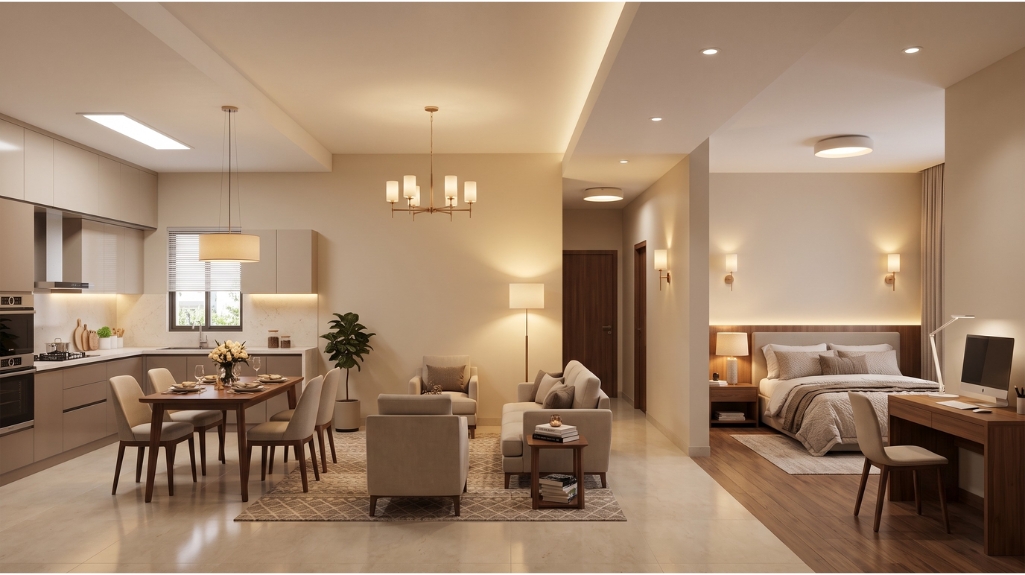
The dining area benefits enormously from a pendant light or a small chandelier hung directly above the dining table. This single fixture does three things simultaneously: it provides focused task light for eating, it defines the dining zone visually within an open-plan space and it creates a warm, intimate atmosphere during meals.
The pendant or chandelier should hang at a height that places the bottom of the fixture approximately 70 to 80 centimetres above the table surface. Lower than this and guests feel enclosed. Higher than this and the light loses its focused quality. For a standard 4-seater to 6-seater dining table, a single pendant of 30 to 45 centimetres diameter or a cluster of three smaller pendants works well proportionally.
Colour temperature for dining: 2700K to 3000K warm white is the universally correct choice. Warm light makes food look more appealing, makes skin tones warmer and creates the conviviality that makes meals feel like events rather than fuel stops.
Study or home office
The study or home office needs the highest quality task lighting of any room in the home. Poor study lighting causes eye strain, headaches and reduced concentration, all of which are experienced as tiredness or difficulty focusing rather than being attributed to the light source.
A desk lamp is non-negotiable in any study or home office. The lamp should be positioned to the left of the workspace if you are right-handed and to the right if you are left-handed, so that your writing hand does not cast a shadow over your work. The colour temperature should be 4000K for sustained work sessions: cool enough to support alertness without the harshness of 6500K.
The ambient ceiling light in a study should be at a moderate brightness at 3500K to 4000K, and the desk lamp provides the supplementary task light. Never use only the desk lamp without an ambient source: the extreme contrast between the bright desk surface and the dark surrounding room causes visual fatigue faster than a properly lit room.
Bathroom
Bathroom lighting in Indian homes almost universally consists of a single overhead ceiling light that creates shadows directly below the chin and nose when you stand at the mirror, precisely the areas where grooming precision matters most. The fix is straightforward.
Ambient light: An enclosed ceiling fixture at 4000K for the overall bathroom illumination.
Task light at the mirror: A backlit mirror, a mirror with integrated LED lighting or a dedicated vanity light strip mounted horizontally above or on both sides of the mirror at face height (150 to 165 centimetres from the floor) eliminates mirror shadows completely. Horizontal mounting above the mirror is the most practical option for Indian bathrooms where wall space on either side of the mirror is often limited.
Section 4: Indian Apartment Specifics: Low Ceilings and Single Switchboards
Most Indian apartments built by developers have two lighting challenges that global interior design content never addresses: low ceilings and the tyranny of the single switchboard. Here is how to work with both.
Low ceilings (below 9.5 feet)
The standard ceiling height in most Indian developer apartments is between 9 and 10 feet (2.7 to 3 metres). This is low compared to the 10 to 12 foot ceilings that make pendant lights and chandeliers look dramatic in design magazines. In a 9-foot ceiling room, a pendant light hung at the correct dining table height of 70 to 80 centimetres above the table leaves only about 140 centimetres of clearance between the fixture and the table, which can feel oppressive.
For low-ceiling Indian apartments, here are the practical rules. Flush-mount ceiling fixtures work better than hanging pendants in any room other than directly above the dining table where the reduced height is functional rather than a problem. Semi-flush fixtures that hang 15 to 30 centimetres below the ceiling add visual interest without the full height cost of a pendant. Wall sconces placed at 150 to 170 centimetres from the floor draw the eye sideways rather than upward and make the room feel wider. Floor lamps and table lamps that light upward against the walls and ceiling create the illusion of greater height by illuminating the ceiling plane.
The single switchboard problem
In most Indian developer apartments, each room has a single switchboard that controls all the lights in that room simultaneously. Adding table lamps and floor lamps solves this because plug-in lamps have their own switches and can be used independently of the ceiling light. Using smart bulbs in existing ceiling fixtures, which can be dimmed and colour-temperature adjusted via a phone app without any rewiring, is another practical solution. A third option is to ask an electrician to add a separate switch for a new circuit during any renovation work, which costs relatively little when done alongside other electrical work.
Section 5: Fixture Types and When to Use Each
Here is a quick reference guide to the most common light fixture types available in India, what each one is best suited for and what to avoid.
| Fixture Type | Best Room | Ceiling Height Needed | Colour Temp | Key Buying Note |
| LED ceiling panel (flat) | Kitchen, utility, bathroom | Any | 4000K | Avoid in living and bedroom: too flat |
| Chandelier | Living room, dining room | 10 feet plus preferred | 2700 to 3000K | Check weight load of ceiling junction box |
| Pendant light | Dining table, bedside, kitchen island | 9 feet plus | 2700 to 3000K | Hang 70 to 80 cm above table surface |
| Semi-flush mount | Living room, bedroom, hallway | Any | 2700 to 3000K | Best for ceilings below 9.5 feet |
| Floor lamp | Living room beside sofa, bedroom corner | Any | 2700 to 3000K | Choose base width under 30 cm for small rooms |
| Table lamp | Bedside, console table, study, TV unit | Any | 2700 to 3000K | Shade should cover the bulb fully |
| Wall sconce | Hallway, beside bed, bathroom flanking mirror | Any | 2700 to 4000K | Mount at 150 to 170 cm from floor |
| LED strip / tape light | Under-cabinet, behind TV, headboard, shelves | Any | Match surrounding fixture K | Use 12V DC strips for DIY, 220V for fixed install |
| Desk or study lamp | Study table, home office desk | Any | 4000K | Position opposite to writing hand side |
Section 6: LED Wattage and Lumens Guide for Indian Rooms
One of the most common questions Indian buyers have when shopping for LED lights is how many watts they need for a particular room. The answer requires understanding the relationship between watts, lumens and room size.
Watts measure energy consumption, not brightness. Lumens measure actual light output. A 10-watt LED can produce anywhere from 800 to 1100 lumens depending on its quality and design. When buying LED lights, look at the lumen output, not just the wattage.
| Room Size (sq ft) | Recommended Lumens (ambient) | Approximate LED Wattage | Notes |
| Up to 100 | 1500 to 2500 lumens | 15 to 25 watts | One good ceiling fixture sufficient |
| 100 to 150 | 2500 to 4000 lumens | 25 to 40 watts | One ceiling plus one supplementary source |
| 150 to 200 | 4000 to 5500 lumens | 40 to 55 watts | Two ceiling or one ceiling plus multiple lamps |
| 200 to 300 | 5500 to 8000 lumens | 55 to 80 watts | Zoned lighting with multiple circuits recommended |
| Kitchen (any size) | 500 to 700 lux at counter level | Varies | Task light at counter level more important than total lumens |
| BEE star rating for LED lights in India The Bureau of Energy Efficiency rates LED lights on a star scale from 1 to 5 in India. A 5-star BEE-rated LED bulb produces more lumens per watt than a lower-rated one. For a household that runs lights six to eight hours a day across multiple rooms, choosing 4-star or 5-star BEE-rated LED bulbs saves Rs 800 to Rs 2,000 per year on electricity bills compared to lower-rated equivalents of the same apparent brightness. Always check for the BEE label when buying LED lights in India. |
Frequently Asked Questions About Home Lighting in India
Which light is best for a bedroom in India?
Warm white LED lights at 2700K to 3000K colour temperature are the best choice for Indian bedrooms. This colour temperature creates a relaxing, sleep-supportive environment in the evening. For the ambient ceiling fixture, a semi-flush mount or ceiling fan with an integrated warm white light at moderate brightness sets the right base level. Add bedside table lamps or wall-mounted reading lights at the same 2700K colour temperature for a complete bedroom lighting setup. Avoid cool white or daylight LED panels (5000K and above) in bedrooms as they suppress melatonin production and make it harder to wind down before sleep.
How many lights does a living room need?
A standard Indian living room between 150 and 200 square feet needs a minimum of three light sources for proper layered illumination: one ceiling fixture for ambient light, one floor or table lamp for supplementary warmth and one accent source such as a picture light or LED strip. For larger living rooms above 200 square feet or open-plan living and dining areas, four to five light sources distributed across the space create the layered quality that distinguishes a well-designed room from a merely furnished one. You do not need more fixtures. You need the right fixtures in the right positions.
What is the difference between warm white and cool white LED?
Warm white LED lights have a colour temperature of 2700K to 3000K and produce a yellow-tinged glow similar to incandescent bulbs and candlelight. They make rooms feel cosy, intimate and relaxed. Cool white LED lights have a colour temperature of 4000K to 6500K and produce a blue-white glow similar to daylight or fluorescent office lighting. They make spaces feel bright, clinical and alert. Warm white is the correct choice for living rooms, bedrooms and dining areas in Indian homes. Cool white is appropriate for kitchens, bathrooms and study areas where task focus matters more than atmosphere.
Is a pendant light suitable for low-ceiling Indian apartments?
Pendant lights work in low-ceiling Indian apartments only when hung directly above a dining table or a kitchen island, where the functional height reduction is acceptable and even beneficial. In a standard 9 to 9.5 foot Indian apartment ceiling, a pendant hung at the correct dining table clearance of 70 to 80 centimetres above the table surface leaves adequate head clearance for people moving around the table. For general room lighting in low-ceiling apartments, semi-flush mount fixtures are a better choice than full pendants because they provide the decorative quality of a pendant without the full vertical clearance requirement.
What kind of light should I use for studying in India?
A dedicated desk lamp at 4000K colour temperature is the minimum requirement for a study zone in an Indian home. The lamp should produce enough brightness to illuminate the work surface clearly without glare on a laptop or phone screen. Position the lamp to the left if you are right-handed or to the right if you are left-handed, so your writing hand does not cast a shadow over the work. Always have an ambient ceiling light on in the room at the same time as the desk lamp: working in a dark room with only a bright desk lamp causes much faster eye fatigue than working in a moderately lit room with supplementary task light at the desk.
How do I make my Indian apartment look more premium with lighting?
Three changes make the greatest difference for the least investment. First, replace any cool white 6500K ceiling panels in living areas and bedrooms with warm white 2700K to 3000K equivalents. This single change transforms how every other element in the room reads. Second, add one table lamp or floor lamp to the living room so the room has at least two light sources on in the evening rather than one. Third, add an accent light to the main wall feature in the living room, whether it is a painting, a TV wall or a decorative shelf. These three changes cost Rs 2,000 to Rs 5,000 in total and produce a result that looks like a professional lighting design.
Light Your Home Right with Apka Interior
Every fixture type covered in this guide is available at Apka Interior. From ceiling lights and pendant fixtures to floor lamps, table lamps, wall sconces and LED strip solutions, the full indoor lighting range is available online with delivery across India.
Explore our complete Indoor Lights collection for ceiling panels, semi-flush mounts and decorative ceiling fixtures. Find Floor Lamps and Table Lamps to add the task and accent layers every room needs. Complete your living room setup with Paintings and Sculptures that deserve accent lighting, and browse our Handicraft and Artefacts collection for display pieces that come alive under a well-placed light.